

Undergraduates on industrial training
SIWES or IT placement
- Placement documentation your school can verify
- A mentor who reviews your code, not just your attendance
- Public commits you can show at your defence
Cuesoft Developer Labs
We run an open-source internship for students and researchers. You work on production code that real people use: Apparule, Expendit and Upstat. The engineers who maintain it review your work.
Ace is our assistant. Ask it about any role, project or term on this page before you apply.
Ace: Hi, I’m Ace. I know every role, project and term on this page. Ask me anything, or tell me what you study and I’ll suggest a role.
CueLABS™ is our open-source department. You join a squad, pick up real issues and ship to code that is live and public. Nothing here is a practice exercise. You work with coding agents and automation from day one, because that is how software is built now.
Who it is for
SIWES or IT placement
Masters and PhD
Roles
Engineering & design
NEXT.JS · REACT · TYPESCRIPT
Product surfaces and dashboards across all three codebases.
Engineering & design
GO · GRPC · POSTGRES · MONGO
APIs, data pipelines and the services behind every feature.
Engineering & design
FLUTTER · DART
Apparule’s capture flow, where the camera work happens.
Engineering & design
FIGMA · DESIGN TOKENS
Flows, states and the component libraries engineers build against.
Engineering & design
DOCKER · HELM · CI/CD · OPENTELEMETRY
Pipelines, deploys and the monitoring that keeps them honest.
Research · Graduate students
ANOMALY DETECTION · CV
Transaction anomaly models and pose quality control.
Research · Graduate students
LEDGERS · TAX LOGIC
Categorisation, financial ratios and filing rules.
Research · Graduate students
SLOS · TELEMETRY
Failure prediction and reliability signals in Upstat.
Projects
These are not practice repositories. Each one is live, MIT licensed and open to your pull requests today.
Apparule
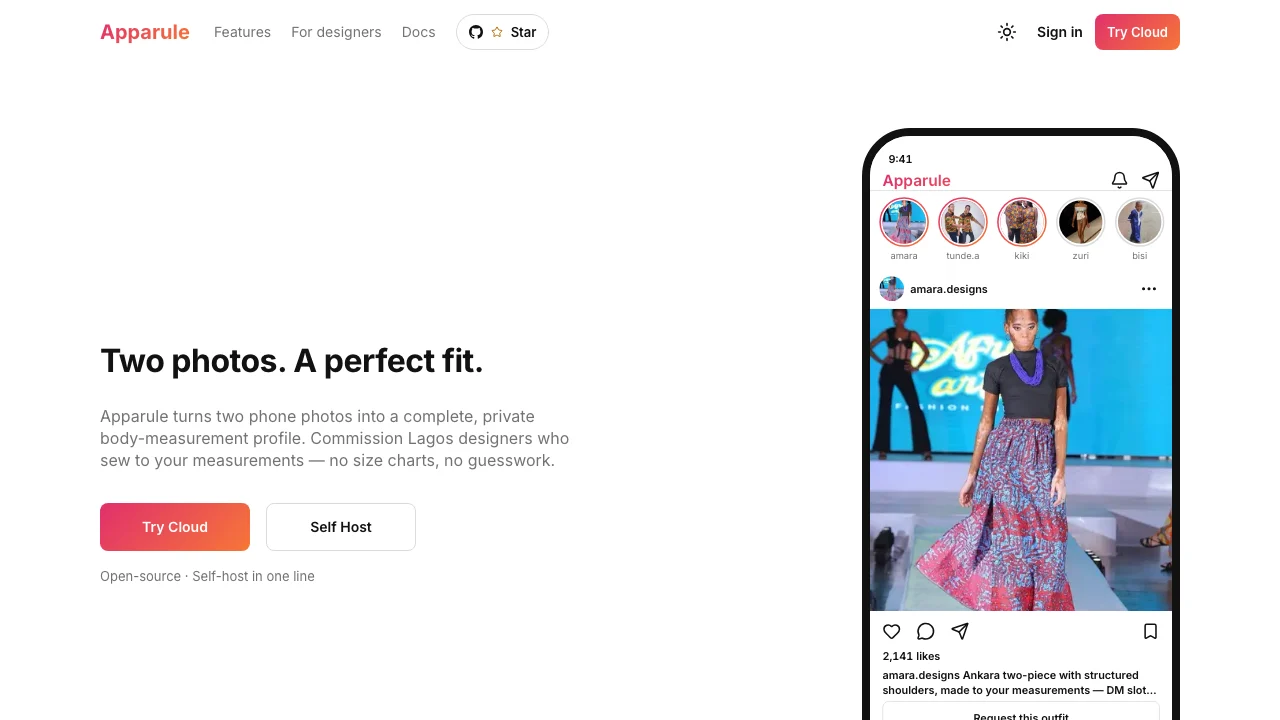
Tailors and fashion SMEs still keep measurements on paper, and shoppers guess at size charts that do not match their body. Both sides lose to returns and remakes.
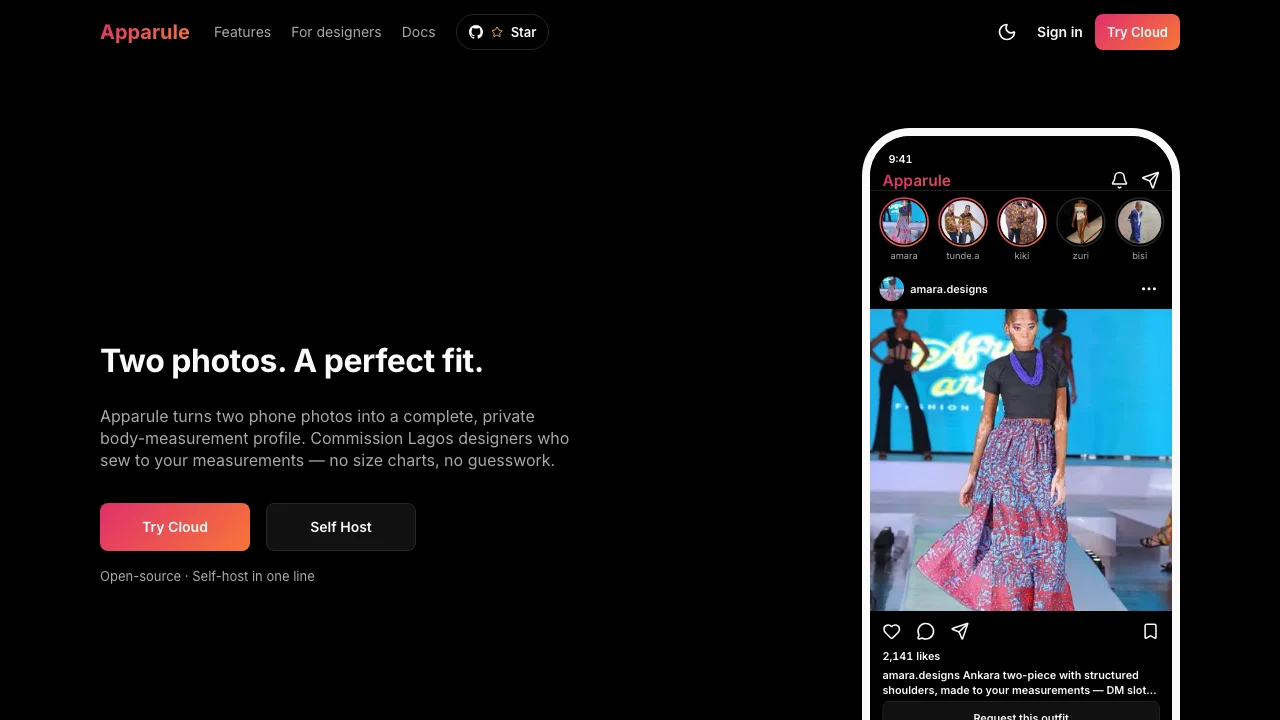
Apparule turns two phone photos into a complete, private body-measurement profile, then uses those measurements for every order.
 Opens in a new tab
We label and scope every open issue. We pick your first one to be small enough to merge in week one.
This is not a syllabus. It is what runs in our three repositories today. You will not use all of it, but you will get good at some of it.
One form: who you are, the role you want, and how long you can commit. No cover letter, no essay.
A short talk about what you have built and where you want to improve. We want people who finish things.
You get repository access, a mentor, and a first issue chosen to be small enough to land in week one.
Work the board like any engineer: branch, pull request, review, merge, with AI in the loop. Your name is on every commit.
You leave with merged code in a public repository, a documented internship and a reference from your reviewer.
Every CueLABS™ repository follows one published engineering standard: the same rules, templates and CI gates in each project. The standard is open source too, so you can read exactly what we expect before you apply.
You branch off a fresh main. Nobody pushes to main or merges their own work.
Commit messages start with feat:, fix:, chore:, docs:, refactor: or test:, which gives you a readable history you can show an employer.
Every change needs at least one approving review from a CODEOWNER. You get real feedback and we expect you to answer it.
Issue and pull-request templates ask you to state the change, the affected area and how you tested it.
README, CONTRIBUTING, CODE_OF_CONDUCT, SECURITY and CODEOWNERS files, identical in every repository.
Lint, type checks and tests run on every pull request, so reviews are about design, not formatting.
The pathway
CueLABS™ is the middle of your path with us. You learn the craft at CueTA™, build in the open here, then we can put you forward to CueHIRE™ on the strength of what you shipped.
learn the craft
Structured training if you are starting from scratch or need the fundamentals first.
Visit CueTA™build in the open
Ship production software on live open-source projects with maintainer review.
the hiring pathway
The hiring pathway. When you have shipped here, we can put you forward to CueHIRE™ with your commit history as proof.
Visit CueHIRE™Values
Your name is on every commit, permanently. You own what you ship.
Squads, reviews and public boards. Nothing here ships alone.
One published engineering standard, enforced in CI on every pull request.
The full version is Cuesoft’s: create IMPACT by being a Cuesoft ACE. It is where Ace, the assistant above, gets its name.
Contributors
Interns, maintainers and outside contributors across Apparule, Expendit and Upstat, pulled live from GitHub. A commit history cannot be embellished.